
SINGAPORE – A decade after Hyundai unveiled the plain Ioniq saloon, the South Korean carmaker’s bet on the industry’s Cars transition towards electric vehicles has now hit a new high with the Ioniq 9.
This is the only multi-seater electric sport utility vehicle (SUV) in town. Big, brash and loaded with thoughtful luxury touches, the Hyundai deserves a spot among premium European models.
There are two parts to the Ioniq story.
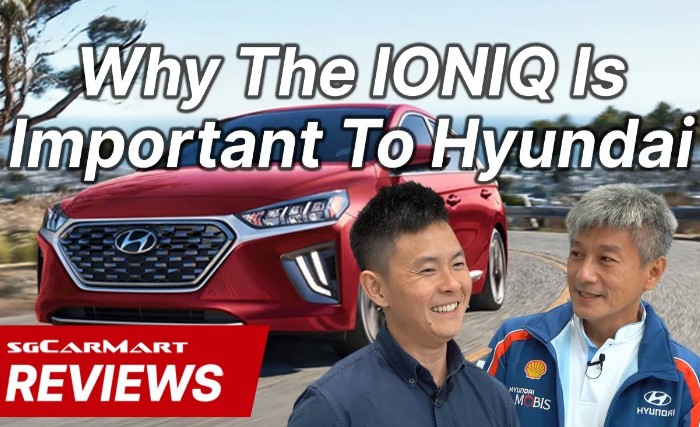
The first began in 2016 with the conservative-looking saloon that is also used as a taxi in Singapore.
Its nondescript styling masked Hyundai’s vision for the energy transition, for the Ioniq was among the first mass-market cars to be available as a hybrid, plug-in hybrid and fully electric vehicle. This was while the likes of Toyota were still bent on hybrid technology.
Part two of the story came in 2021, when Hyundai transformed Ioniq into a sub-brand for its electric cars, launching the Ioniq 5, a boldly styled crossover. Then came the Ioniq 6, an even more eye-catching saloon with Art Deco- inspired looks.
Judging by these two models, it would seem that unusual design is integral to the Ioniq character. The latest model confirms this.
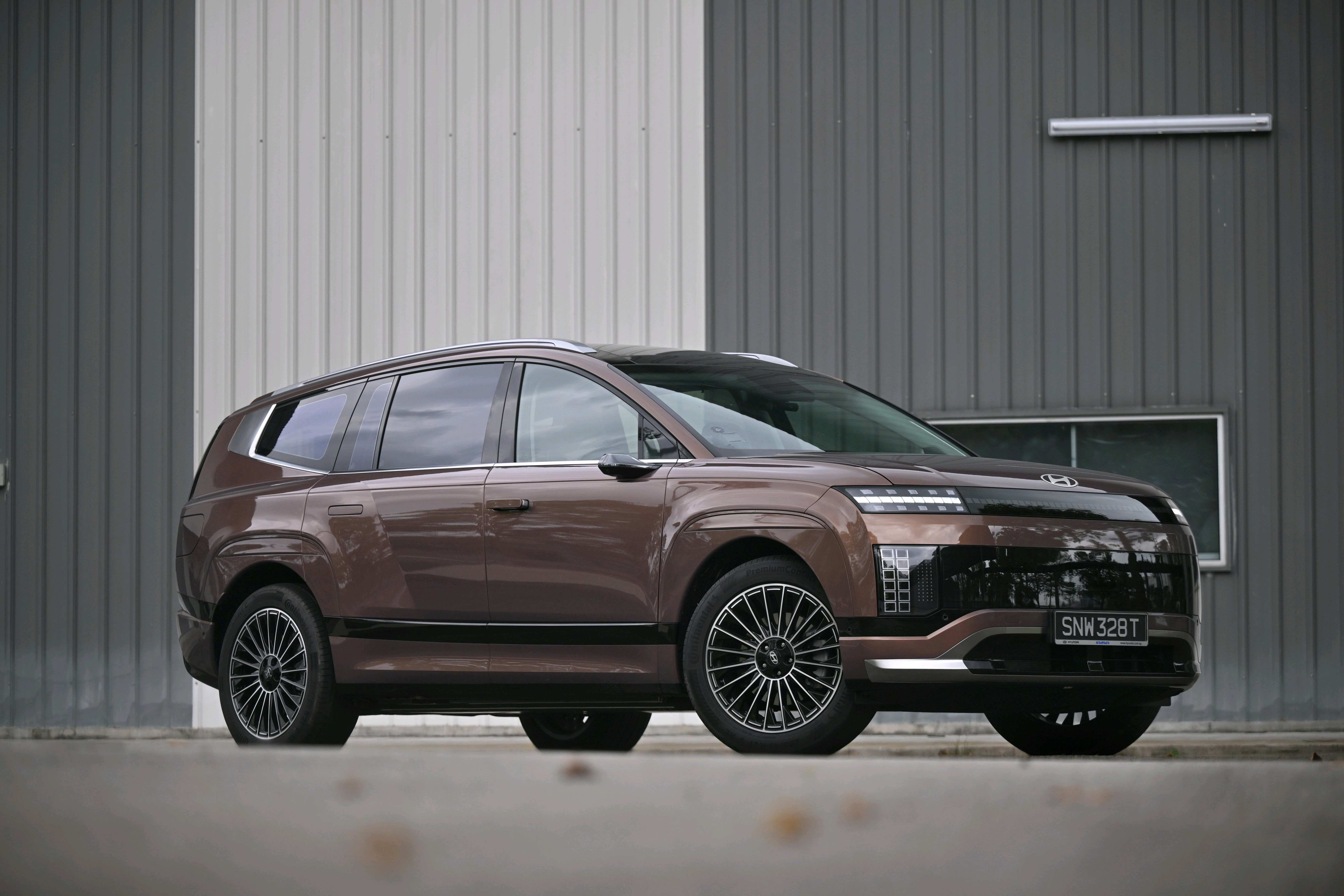
While the use of pixels in the lighting design is a theme common across the Ioniq models, the Ioniq 9 has a completely different style from the 5 and 6.
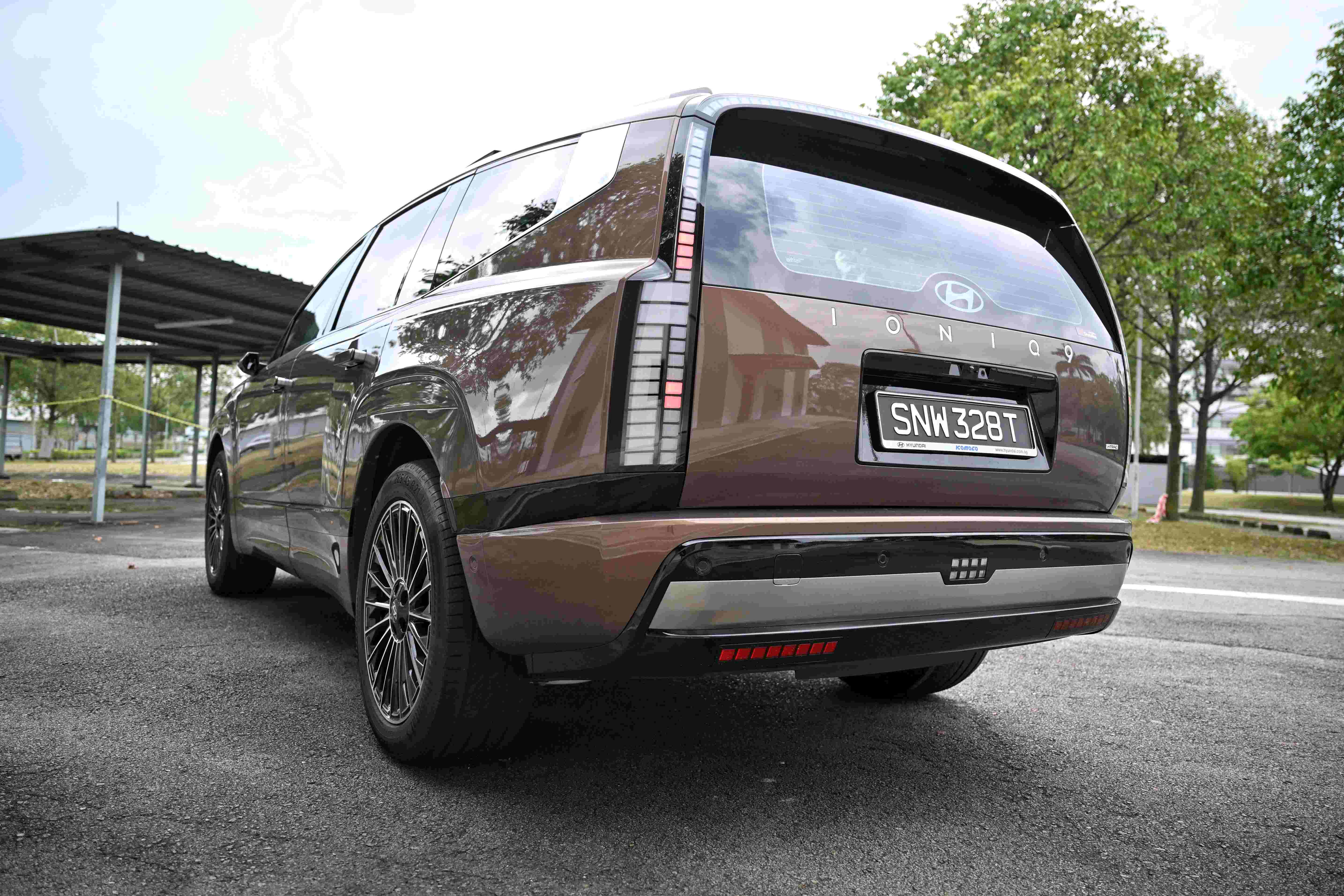
With an overall length of 5,060mm, the 9 is the largest Ioniq model yet, being 590mm longer than the 2016 Ioniq. Its 1,790mm height and overall proportion mark it as an SUV, with some interesting details that set it apart from the crowd.
The front overhang is short. A pronounced shoulder line arcs down towards the rear to meet the pixel-style tail lamp cluster. These features make the 9 look more like a concept car that manufacturers like to flaunt at motor shows than a production model for sale.
The expressive colour choices accentuate the 9’s show-car looks. The test car’s metallic brown appears slightly purple or pink under the sun. There is also a pearlescent green option, which is similarly glamorous. There are interesting colour choices for the cabin, including the brown-and-white combination of the test car.
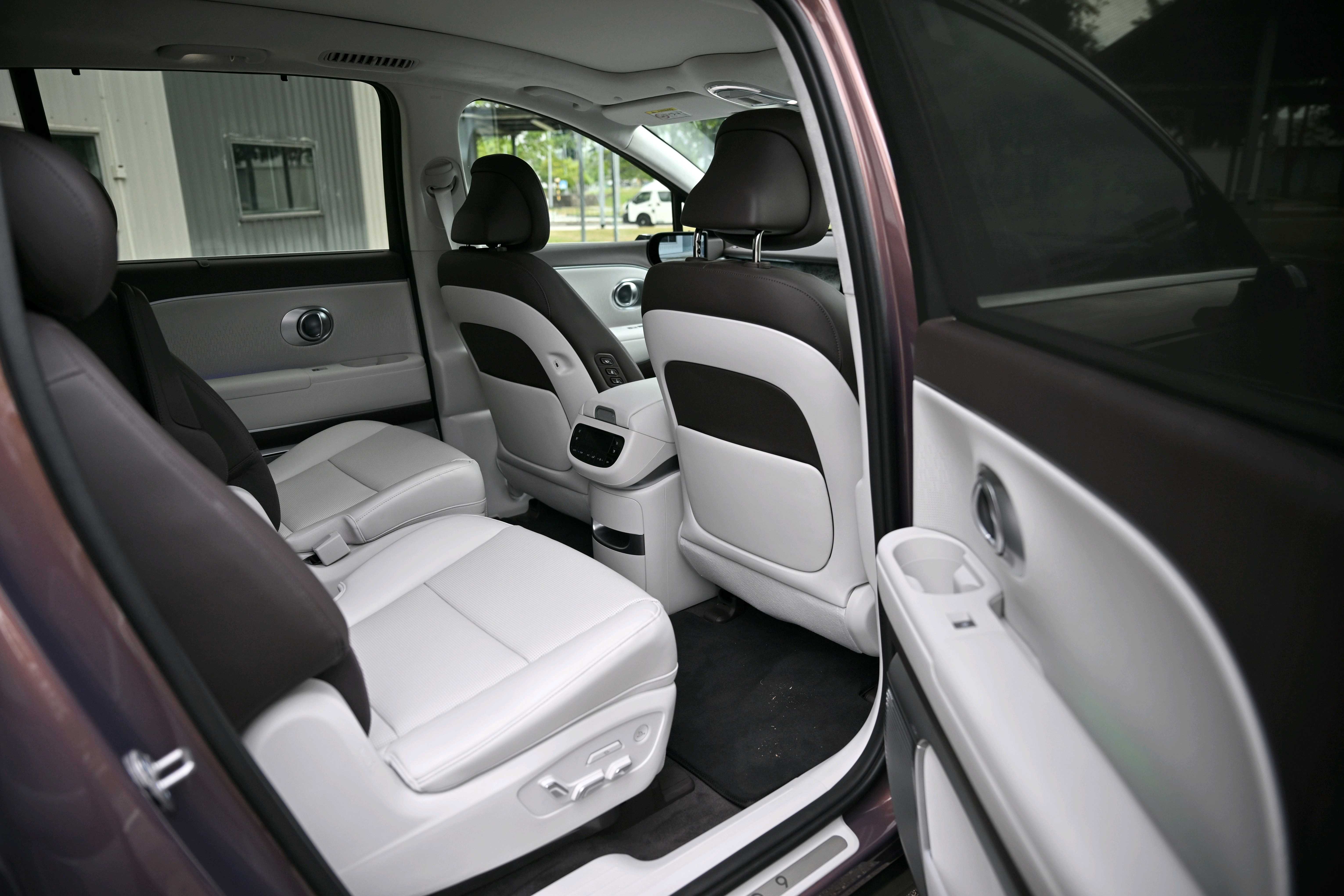
The car is available as a six- or seven-seater. The difference is in the second row, where there is a bench for either two or three individual seats. The captain chairs in the six-seater version are large and cushy, so the Ioniq 9 can pass off as a chauffeur-driven limousine.
The third-row bench is set a bit low, but otherwise, legroom for all on board is ample. This is no surprise, of course, given the car’s very long wheelbase. At 3,130mm, the distance between the wheel axles is enough to park a classic Mini.
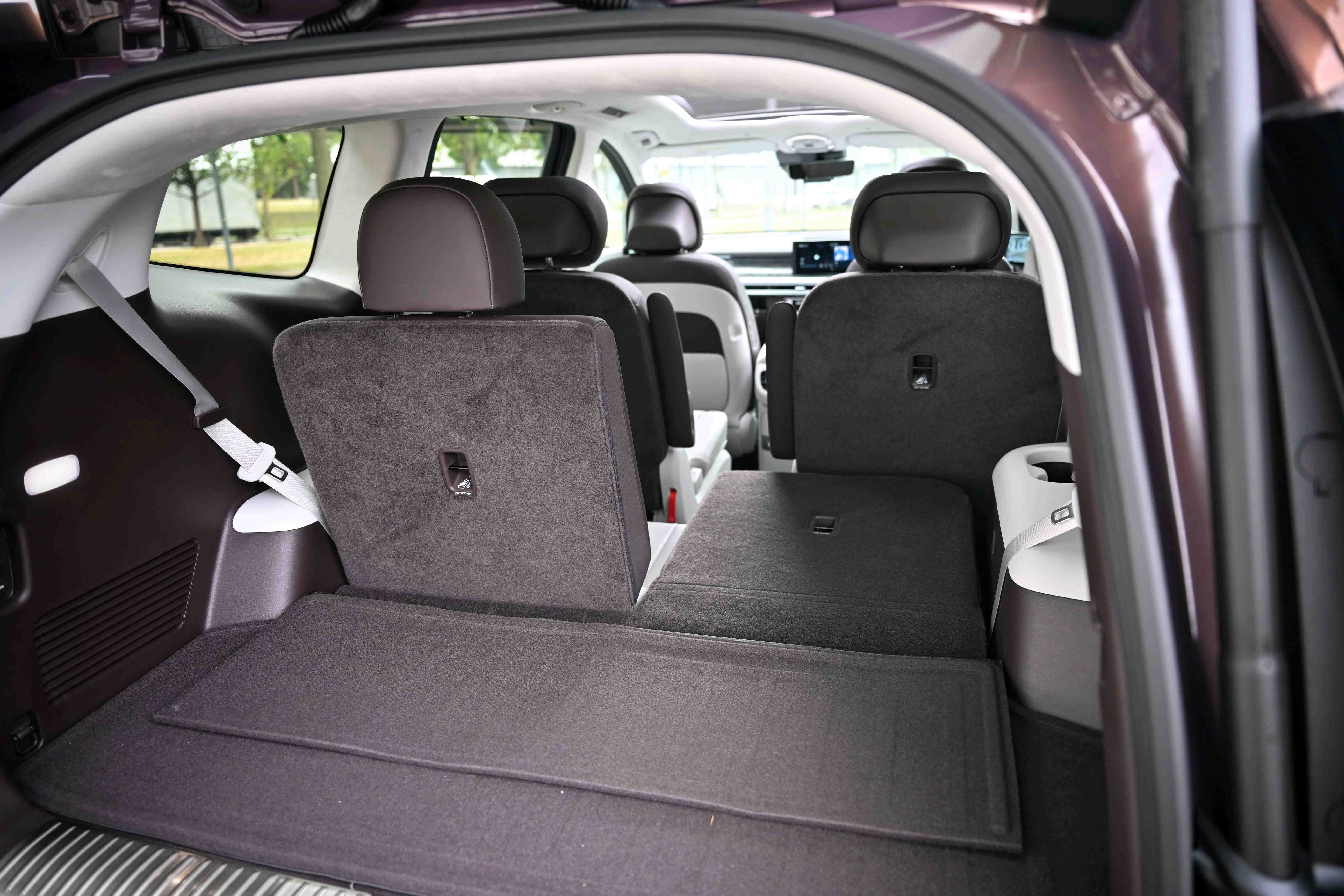
The boot, however, is not so spacious, and usability is hampered by the relatively narrow opening, high boot floor and low ceiling.
The driver’s seat has a massage function. In a rather unusual design, the seat not only gives a good back rub, but also extends the massage to the seat base, so the driver’s behind gets a workout too.
In less intrusive ways, the car delivers a first-class tactile experience. Like many other Hyundai models, there are physical switches for frequently used features. The gear selector, which is a thick stalk sprouting from the steering column, even vibrates when it is twisted from Drive to Reverse, giving an additional bit of feedback apart from the gear indicator on the digital instrument.
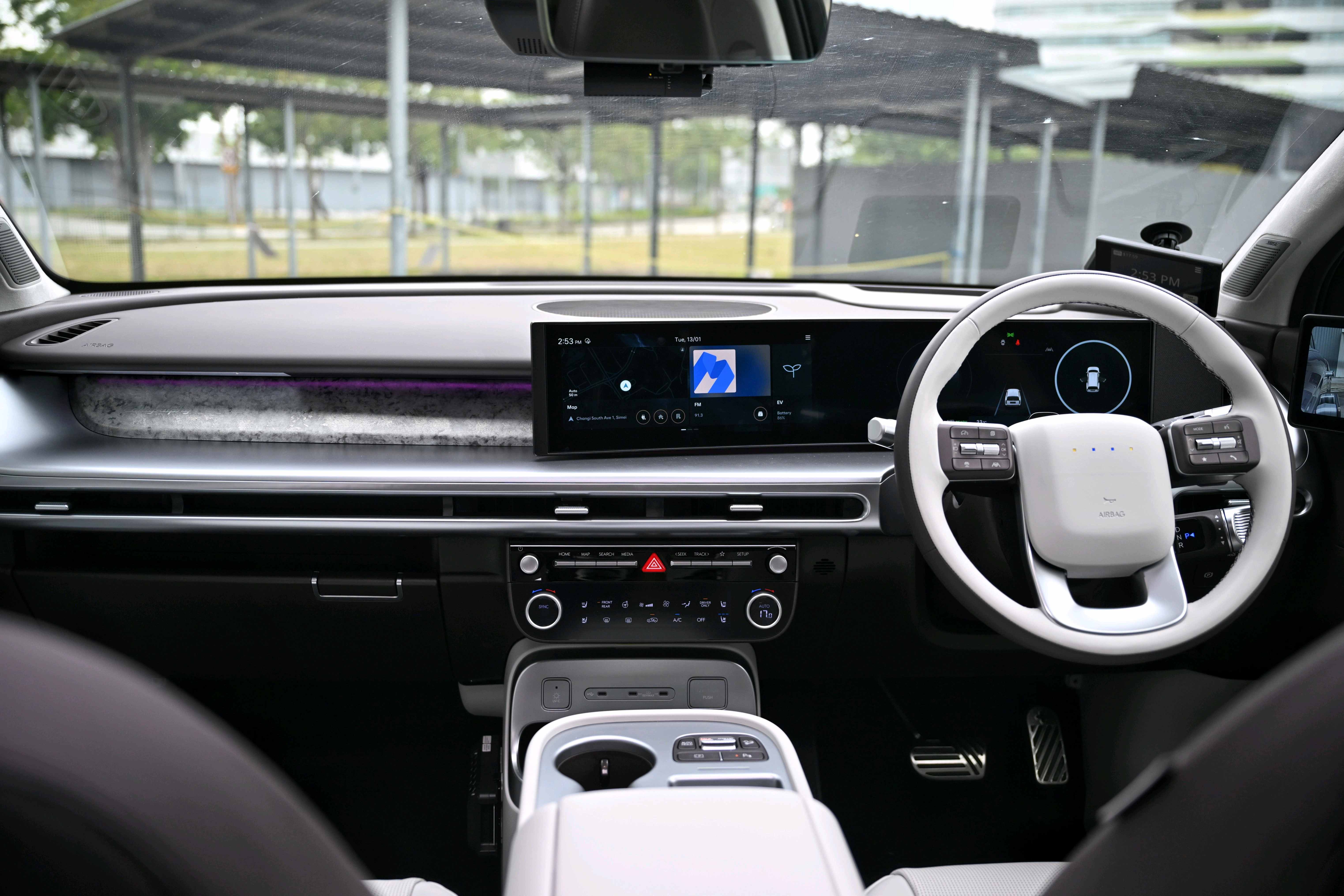
There are also plenty of storage spaces and power points in both USB and cigarette lighter-style plugs in the cabin, a wireless charging pad, and even a console that uses ultraviolet light to sterilise mobile phones.
To chat with those seated way back at the third row, the car has a built-in public address system which broadcasts the driver’s voice over the sound system. Through the centre touchscreen display, it is possible to independently adjust ventilation and positions for all six seats.
Less convenient is having to deactivate the vibrations and warning chimes at the beginning of each drive. Otherwise, the electronic nannies will complain whenever the driver is looking away or if the car is veering slightly out of lane, even for a split second.
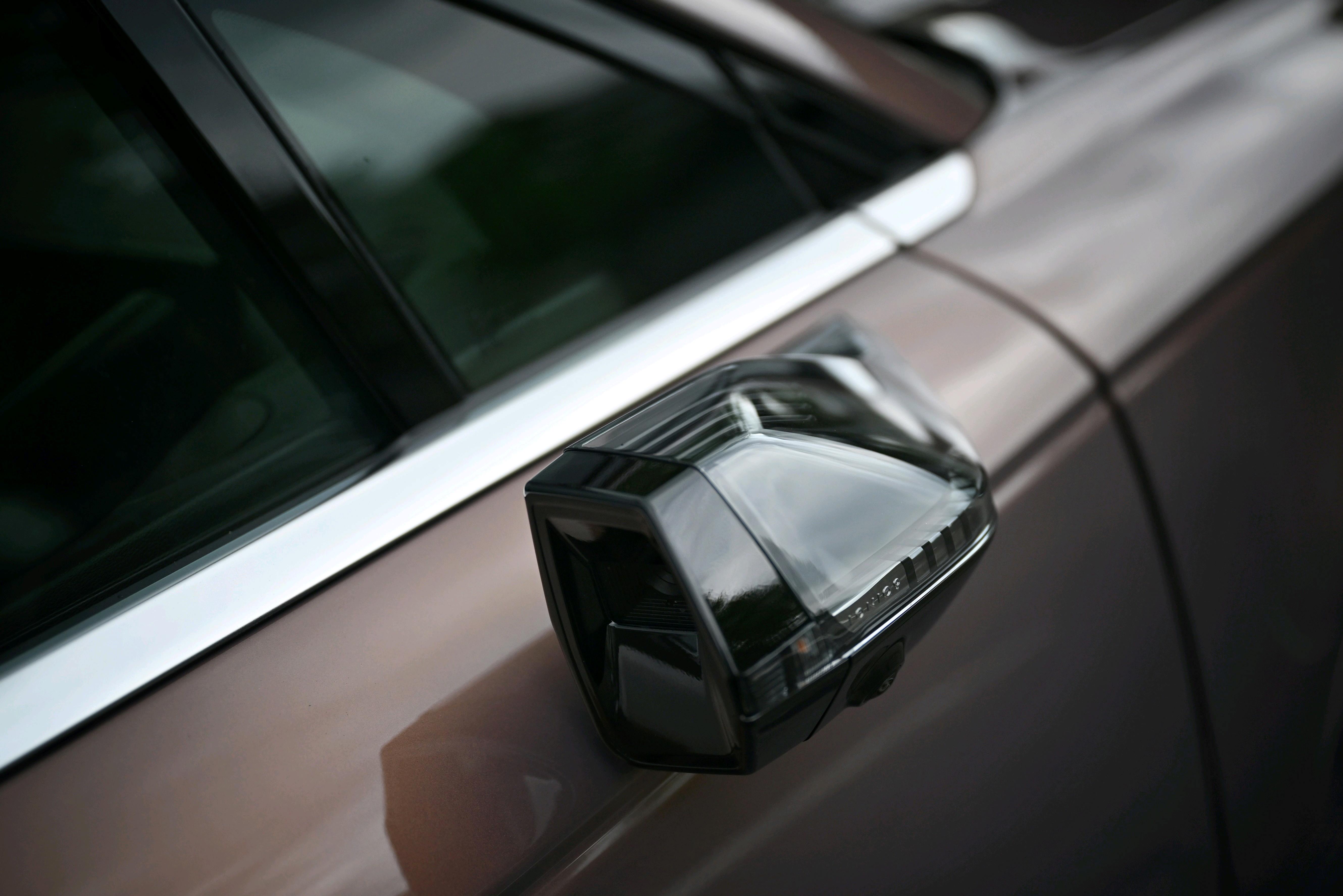
The digital wing mirrors take some getting used to.
The images from the two video cameras near the windows are displayed on screens about as big as a smartphone on the inside of the doors, and within the driver’s line of sight. The feature gets easier with use, but, like other cars with this design, it is difficult to gauge distance.
The rear-view mirror in the cabin is also a digital feature, although it can convert into a conventional version at the flick of a switch. The suite of high-tech mirrors is reserved for the top-end Calligraphy version of the Ioniq 9 and is not on the standard version.
The Ioniq 9’s user interface is otherwise as good as it gets. Want to use the motors more to slow down the electric car and recover energy when your foot is off the accelerator? That is easily done by pulling the left paddle behind the steering wheel, as if you are shifting down a few gears in a petrol-engine car.
In dual-motor form, the Ioniq 9 is undoubtedly powerful, but acceleration is linear and smooth rather than sudden and sharp. This means passengers are less likely to feel nauseated.
The ride is also cushy, but when pushed, the car always feels confident and accurate.
The test car averages 22.2kWh/100km over the three-day test, suggesting that it can travel over 520km on a single charge. This is less than the claimed 600km range, but more than sufficient for use in Singapore, as well as a decently long jaunt across the border.
From the design to the packaging to the driving performance, Hyundai’s experience with electric vehicles is certainly showing. Then again, it has been practising for a decade and counting.
Hyundai Ioniq 9 AWD Calligraphy (6-seater)
Price: $412,999 with COE, before applicable discounts
Motors: Permanent magnet synchronous with 110.3kWh battery
Transmission: Single-speed
Power: 226.1kW
Torque: 605Nm
0-100kmh: 6.7 seconds
Top speed: 200kmh
Power consumption: 20.6kWh/100km
Charging capacity: 11kW AC; 350kW DC
EV range: 600km
Agent: Komoco Motors
Rating: ★★★★☆
Source:[The Straits Times] © SPH Media Limited. Permission required for reproduction.